Global warming research based on quantile regression model and empirical mode decomposition

Expand
  • 1.School of Economics, Shanghai University, Shanghai 200444, China; 2. Financial Information Research Center, Shanghai University, Shanghai 200444, China

Received date: 2020-03-07

  Online published: 2021-04-30
Abstract

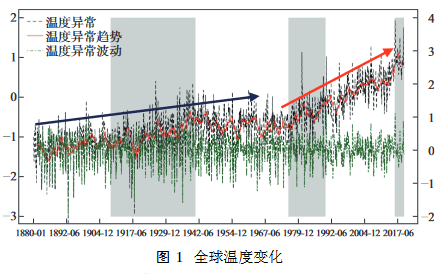
The purpose of this study is to analyze climate’s variation trend and forecast the climate. The main methods are known as quantile regression and empirical mode de- composition (EMD). Firstly, a global heat map is utilized for the descriptive statistics of global temperature data. The EMD method is applied for data denoising to analyze global temperature’s variation trend, and the concept of global temperature cycle is introduced. These aim to study the trend of global warming. Secondly, the multivariate linear regres- sion model and the quantile regression model are applied to identify factors influencing global temperature. Then the temperature model is built to predict temperature changes. The findings can provide statistical support for global climate analysis.

Cite this article

XIAO Jie, AI Min, NI Zhongxin . Global warming research based on quantile regression model and empirical mode decomposition[J]. Journal of Shanghai University, 2024 , 30(1) : 152 -163 . DOI: 10.12066/j.issn.1007-2861.2293

Outlines

/