基于 FPGA 的国密算法 SM4 和 ZUC 可重构设计

展开
  • 上海大学 微电子研究与开发中心, 上海 200444
严利民 (1971—), 男, 副教授, 博士, 研究方向为集成电路设计与应用、新型显示驱动技术、智能传感器及控制

网络出版日期: 2024-07-09

基金资助

国家自然科学基金资助项目 (52107239)

Reconfigurable design of state secret algorithm SM4 and ZUC based on FPGA

Expand
  • Microelectronics Research and Development Center, Shanghai University, Shanghai 200444, China

Online published: 2024-07-09

摘要

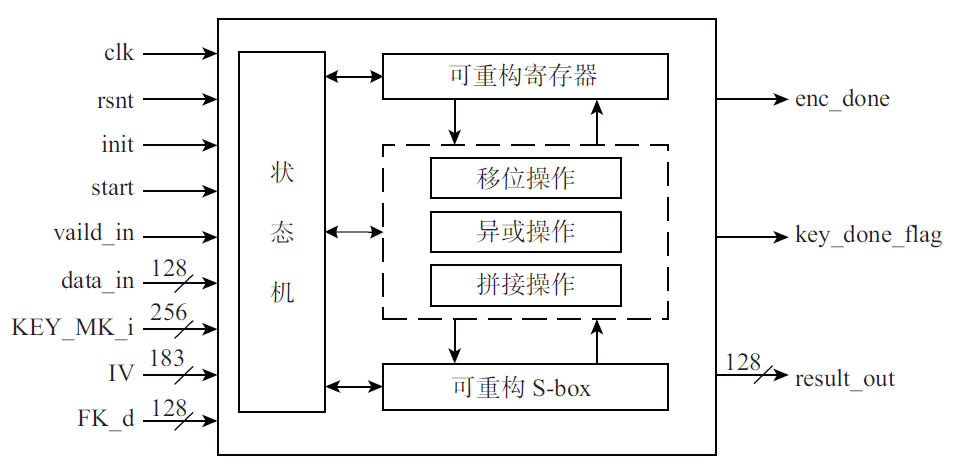
提出了一种 SM4 和 ZUC-256 密码的硬件实现方案. 首先对两个密码算法进行硬件语言描述, 然后构建了两个可重构单元——可重构寄存器和可重构 S-box 单元, 从而在实现两个密码算法的基础上, 有效降低了资源消耗, 提高了资源利用率. 在现场可编程逻辑门阵列 (field programmable gate array, FPGA) 上进行硬件验证. 结果表明, 本密码可重构方案中的硬件开销有明显的降低.

本文引用格式

李燕然, 严利民 . 基于 FPGA 的国密算法 SM4 和 ZUC 可重构设计[J]. 上海大学学报(自然科学版), 2024 , 30(3) : 503 -511 . DOI: 10.12066/j.issn.1007-2861.2434

Abstract

This paper proposes a hardware implementation scheme of SM4 and ZUC-256 ciphers. This scheme first provided hardware language description for the two ciphers, and then two reconfigurable units—reconfigurable register and reconfigurable S-box unit were constructed. Accordingly, based on the realization of two password algorithms, resource consumption was effectively reduced and resource utilization was improved. Hardware veri-fication was carried out using a field programmable gate array (FPGA). The results showed that the hardware overhead in the password reconfiguration scheme was significantly re-duced.
文章导航

/