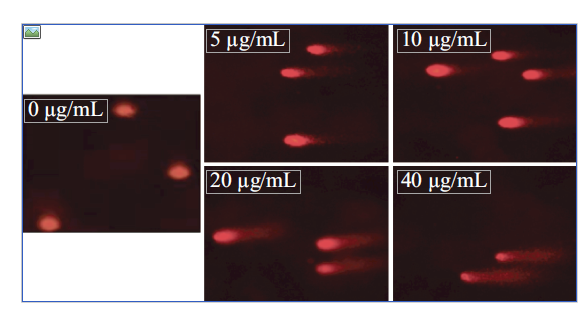
以人神经母细胞瘤细胞 SH-SY5Y 为研究对象, 分析被臭氧氧化的黑碳 (oxidized black carbon, OBC) 颗粒引起的炎症反应以及核因子-κB (nuclear factor-κB, NF-κB) 和磷脂酰肌醇3 激酶(phosphatidylin-ositol-3-kinase, PI3K)/蛋白激酶B(protein kinase B, PKB,又称 Akt) 信号通路的作用. 结果显示: 随着 OBC 颗粒染毒质量浓度的增加 (5、10、20、40 µg/mL), 细胞内线粒体跨膜电位 (mitochondrial membrane potential, MMP) 水平逐渐下降, DNA 损伤程度逐渐升高, 呈现质量浓度和时间依赖性; 细胞外泌白细胞介素-4 (interleukin-4, IL-4) 水平升高和细胞内肿瘤坏死因子-α (tumor necrosis factor-α, TNF-α)基因高表达, 说明 OBC 颗粒会促进 SH-SY5Y 细胞发生炎症反应; 细胞内活性氧 (reactive oxygen species, ROS) 水平升高, 超氧化物歧化酶 (superoxide dismutase, SOD)、血红素加氧酶-1 (heme oxygenase-1, HO-1) 基因表达量升高, 且 HO-1 蛋白水平升高, 说明细胞发生氧化应激; 胞内 NF-κB 和 PI3K/Akt 通路相关蛋白显著变化, 表明 OBC 颗粒激活了 NF-κB和 PI3K/Akt 信号通路. 综上, OBC 颗粒可诱导 SH-SY5Y 细胞发生氧化应激造成 DNA 损伤, 促进炎症反应, 且对 NF-κB 和 PI3K/Akt 信号通路有重要调控作用.
Human neuroblastoma cell SH-SY5Y was applied as a cell line model in order to explore its inflammatory responses to ozone oxidized black carbon (OBC) and also to investigate the potential roles of the nuclear factor-κB (NF-κB) and phosphatidylin-ositol- 3-kinase/protein kinase B (PI3K/Akt) pathways. The results showed that mitochondrial membrane potential (MMP) decreased and the degree of DNA damage increased signifi-cantly in a time- and concentration-dependent manner in SH-SY5Y cells after treatment with OBC. Interleukin-4 (IL-4) leakage and the expression of tumor necrosis factor-α (TNF-α)mRNA were found to increase concentration-dependently, suggesting that OBC could lead to inflammatory responses in SH-SY5Y cells. Meanwhile, significantly elevated in-tracellular reactive oxygen species (ROS) levels and the mRNA expression of superoxide dismutase (SOD) and heme oxygenase-1 (HO-1) demonstrated that OBC caused oxidative stress in SH-SY5Y cells. OBC activated the NF-κB and PI3K/Akt pathways, indicated by significant changes seen in certain proteins. In summary, the NF-κB and PI3K/Akt pathways probably played important roles in OBC promoted oxidative stress and the in-flammatory responses seen in SH-SY5Y cells.