In this study, the laccase from Halomonas alkaliantartica was used as the
research material. The laccase gene was heterolytically expressed in Escherichia coli; a
recombinant laccase was obtained with a molecular weight of 68.5 kDa and an enzyme
activity of 224.5 U/L. This enzyme was then used in the production of wheat bread, with
a blank group of bread produced without laccase as the control. To create the various
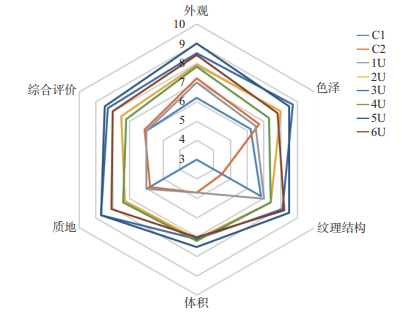
experimental groups, laccase was added in amounts of 1, 2, 3, 4, 5, or 6 U. Compared with
the blank group, the specific volume of the wheat bread was the largest in the 5 U laccase
group. Under this condition, the hardness, adhesion, and chewability of the wheat bread
significantly decreased (p < 0.01). As storage duration increased, the quality of the bread
decreased, but the hardness and stickiness of the experimental bread (5 U laccase) were still better than those of the control group on the third day. This study shows that laccase,
as a flour improver, has considerable potential for use in the preparation of baked foods
and broad application prospects in the field of food processing.