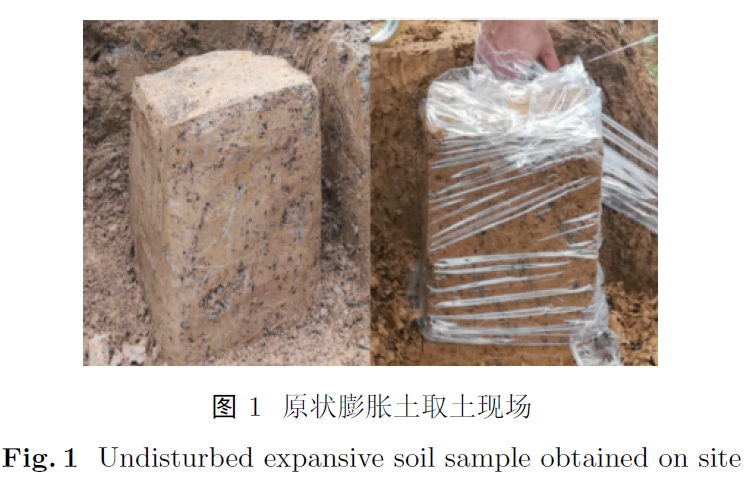
膨胀土由于亲水性矿物的存在, 在吸水与失水时具有胀缩特性. 当干缩过程中产生的收缩应力大于压应力与抗拉强度之和时, 土体将会产生裂缝, 从而对膨胀土工程的稳定性产生重要影响. 为了研究干湿过程中膨胀土抗拉强度的特性, 采用了自制的拉伸试验仪对原状土与南阳膨胀土压实样进行单轴拉伸试验, 测量其在干湿过程中的抗拉强度. 探究了在一个干湿过程中原状土与压实膨胀土抗拉强度的变化, 并制备直接压实样与压实脱湿样对照, 分析了不同的制样方法对抗拉强度的影响. 试验结果表明: 原状样与压实样在脱湿过程中随着含水率的下降, 抗拉强度、干密度增大, 而压实样增长幅度更大; 在吸湿过程中, 原状样与压实样抗拉强度迅速下降并趋于稳定. 根据原状样与压实样在脱湿与吸湿过程中的土水特征曲线, 考虑吸力和饱和度的影响, 提出了干湿过程中抗拉强度的预测公式.
The existence of hydrophilic minerals causes expansive soil to swell and shrink when it absorbs and loses water. When the shrinkage stress is greater than the sum of compressive stress and tensile strength, cracks occur. To study the tensile strength of expansive soil during the drying-wetting process, a self-made testing device was used in this study to conduct uniaxial tensile tests on undisturbed and compacted Nanyang expansive soil experiencing the drying-wetting process. The change in tensile strength was obtained during a drying-wetting cycle. Directly compacted specimens and compacted-drying specimens were prepared to study the effect of the specimen preparation method on tensile strength. Test results show that when the water content of undisturbed and compacted specimens decreases, the tensile strength and dry density increase, and the compacted one increases more rapidly. When the water content increases, the tensile strength of undisturbed and compacted specimens drops rapidly at first and then tends to remain unchanged. According to the soil-water characteristic curves of undisturbed and compacted specimens in the drying-wetting, an equation and corresponding parameter values for predicting the tensile strength of Nanyang expansive soil in the drying-wetting process are obtained.