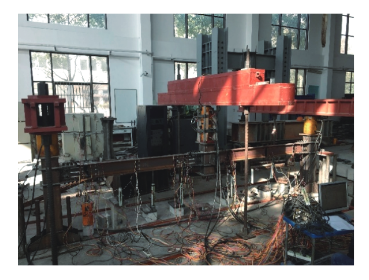
以钢管混凝土隔板贯通式全螺栓节点为研究对象, 设计了一个三柱两跨式平面框架结
构, 采用静力加载的方式模拟结构倒塌的全过程, 考察节点的受力变形、抗力机制、破坏现象
和应变发展. 建立 ABAQUS 有限元模型对结构失效模式进行受力分析. 试验和有限元结果表
明, 倒塌全过程经历 4 个阶段: 梁机制、混合作用、悬线作用和破坏. 结构的抗倒塌能力取决
于抗弯和抗拉能力, 设计节点可以满足 FEMA-365 的转角要求, 结构中的悬线作用出现在破
坏阶段前. 构件破坏发生在中节点 H 型梁下翼缘处, 孔壁撕裂导致裂缝延伸至腹板使 H 型梁
出现断裂. 由于螺栓孔对翼缘的削弱, 建议对螺栓连接 H 型钢翼缘进行构造加强, 以保证连接
的有效性.
A three-column two-span plane frame structure is designed based on a concrete-
filled steel tubular diaphragm through bolted joints. The entire process of collapse is
simulated by static loading, and the mechanical deformation, resistance mechanism, failure
phenomenon, and strain development of the joints are investigated. An ABAQUS finite
element model is established to analyse the structural failure mode. Experimental and
finite element results show that the collapse process can be divided into four stages: beam
mechanism, mixed action, catenary action, and failure. The collapse resistance of the
structure depends on both the bending and tensile capacities. The designed joints can
meet the rotation requirements of FEMA-365, and the catenary action in the structure
occurs prior to the failure stage. In addition, structure component failure occurs at the
lower flange of the middle node H-beam, and the hole wall tearing causes the crack to
extend to the web plate, which in turn generates a fracture in the H-beam. Because of the
weakening of the flanges by bolt holes, it is suggested that the flanges of bolted H-section
steel should be strengthened to ensure the effectiveness of the connection.