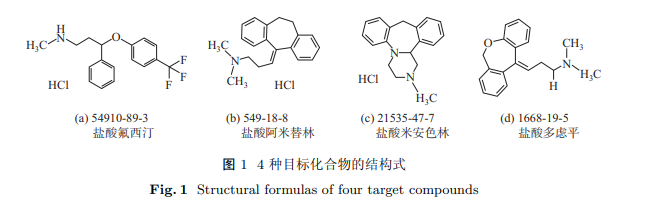
新型选择性 5-羟色胺再摄取抑制剂类药物氟西汀、三环类药物阿米替林和多虑平以及选择性去甲肾上腺素再摄取抑制药物米安色林等是目前常用的抗抑郁药, 但目前对这类药物的非靶点毒性研究较少. 选取雌激素敏感型人乳腺癌细胞 SKBR3 和 MCF-7 为研究对象,检测了以上 4 种抗抑郁药对细胞的增殖能力、氧化应激能力、胞内 Ca2+ 浓度变化及 DNA损伤等生物学效应终点的影响, 并评估其综合毒性效应. 对 SKBR3 细胞的研究结果表明, 在低浓度 (0.001∼10 µmol/L) 暴露 24 h 后, 仅氟西汀明显促进了 SKBR3 细胞增殖, 但当浓度高于 10 µmol/L 时, 氟西汀、阿米替林和米安色林均对细胞活性产生了抑制作用. 低浓度下,氟西汀和阿米替林暴露 24 h 后, 可诱导细胞内活性氧 (reactive oxygen species, ROS) 水平显著升高; 而米安色林和多虑平在暴露 3 h 时, 即可提高细胞内 ROS 水平. 4 种抗抑郁药在低浓度 (0.001∼1 µmol/L) 暴露 24 h 时对细胞内 Ca2+ 水平均没有显著影响, 但当浓度大于1 µmol/L 时, 细胞内 Ca2+ 水平显著升高. 彗星实验表明, 氟西汀在 0.1 和 1 µmol/L 时促进了细胞内 DNA 损伤. 作为对比研究, 采用 MCF-7 细胞进一步评估了氟西汀和阿米替林对细胞增殖能力、氧化应激能力、胞内 Ca2+ 浓度变化等生物学效应终点的影响. 发现类似于SKBR3 细胞, 低浓度下仅氟西汀对 MCF-7 细胞的增殖产生了促进作用. 在较高的浓度下氟西汀和阿米替林均诱导了细胞内 Ca2+ 水平显著升高. 而氟西汀和阿米替林仅在两个最高的暴露浓度 25 和 50 µmol/L 导致了细胞内 ROS 水平的显著升高, 这与它们在低浓度下即可诱导 SKBR3 细胞内 ROS 水平的升高的结果是不同的. 这些研究结果能为评估抗抑郁药化合物的非靶点毒性效应危害提供实验数据.
The selective serotonin reuptake inhibitor fluoxetine, tricyclic antidepressants amitriptyline and doxepin, and selective norepinephrine reuptake inhibitor mianserin are currently commonly used antidepressants. However, the non-target toxicity of these drugs is unclear. The cytotoxicity of fluoxetine, amitriptyline, mianserin, and doxepin were tested using SKBR3 and MCF-7 human breast cancer cell lines. Biological effects end-points included cell proliferation, intracellular reactive oxygen species (ROS), calcium ion (Ca2+) concentration changes, and DNA damage. Exposure to 0.001∼10 µmol fluoxetine for 24 h significantly increased viability of SKBR3 cells. Cell viability was significantly inhibited when the concentrations of fluoxetine, amitriptyline, and mianserin were higher than 10 µmol/L. Exposure to low concentrations of fluoxetine and amitriptyline for 24 h significantly increased intracellular ROS levels, while mianserin and doxepin exposure for 3 h significantly elevated intracellular ROS levels. Concentrations of 0.001∼10 µmol/L of the four antidepressants for 24 h had no significant influence on intracellular Ca2+ concentra-tion change, but concentrations higher than 10 µmol/L significantly increased intracellular Ca2+ levels. The comet assay showed that 0.1 and 1 µmol/L fluoxetine slightly induced DNA damage in SKBR3 cells. Cytotoxicity of fluoxetine and amitriptyline was also exam-ined in MCF-7 cells. The evaluated biological effect endpoints including cell proliferation, and intracellular ROS and Ca2+ concentration changes. Similar to SKBR3 cells, only fluoxetine promoted the proliferation of MCF-7 cells at low concentrations. At higher exposure concentrations, fluoxetine and amitriptyline significantly increased intracellular Ca2+ levels. However, fluoxetine and amitriptyline only significant increased intracellular ROS levels at higher exposure concentrations of 25 and 50 µmol/L, which differed from the observation that they can induce ROS generation in SKBR3 cells at low concentrations. These results provide basic experimental data to evaluate the non-target toxicity of these antidepressants.